
2017-09-20

Sep 20 In-Class Exercise .
Hey Everyone,
Post your solutions to the Sep 20 In-Class Exercise to this thread.
Best,
Chris
Hey Everyone,
Post your solutions to the Sep 20 In-Class Exercise to this thread.
Best,
Chris
Below is a link to an abstract showing how to do it:
.
.
You can click the "Download PDF" and see equations 3, 4, and 5 with Fig. 1(b).
.
For boolean formulas, you can build always build a two layer perceptron with `n+1` neurons where `n` is the number of satisfying assignments for the formula.
.
Input Perceptrons:
.
For each satisfying assignment `x'`, you set `\theta` and the summation appropriately that only that single satisfying assignment makes the neuron's output `1` and all other inputs make it zero.
.
Example: `\vec{x} =<0,1,1>` is satisfying the perceptron for this assignment is:
.
`g_i = { (1 if -x_1 + x_2 + x_3 \geq 2), (0 mbox( otherwise.)) :}`
.
Output Perceptron: This is essentially an "OR" gate.
.
`y(\vec{g}) = { (1 if \sum_{i=1}^n g_i >0), (0 mbox( otherwise.)) :}`
(Edited: 2017-09-20) Below is a link to an abstract showing how to do it:
.
[[http://ieeexplore.ieee.org/abstract/document/1223966/|Solving parity-N problems with feedforward neural networks]]
.
You can click the "Download PDF" and see equations 3, 4, and 5 with Fig. 1(b).
.
For boolean formulas, you can build always build a two layer perceptron with @BT@n+1@BT@ neurons where @BT@n@BT@ is the number of satisfying assignments for the formula.
.
'''Input Perceptrons:'''
.
For each satisfying assignment @BT@x'@BT@, you set @BT@\theta@BT@ and the summation appropriately that ''only that single satisfying assignment'' makes the neuron's output @BT@1@BT@ and all other inputs make it zero.
.
Example: @BT@\vec{x} =<0,1,1>@BT@ is satisfying the perceptron for this assignment is:
.
@BT@g_i = { (1 if -x_1 + x_2 + x_3 \geq 2), (0 mbox( otherwise.)) :}@BT@
.
'''Output Perceptron: ''' This is essentially an "OR" gate.
.
@BT@y(\vec{g}) = { (1 if \sum_{i=1}^n g_i >0), (0 mbox( otherwise.)) :}@BT@
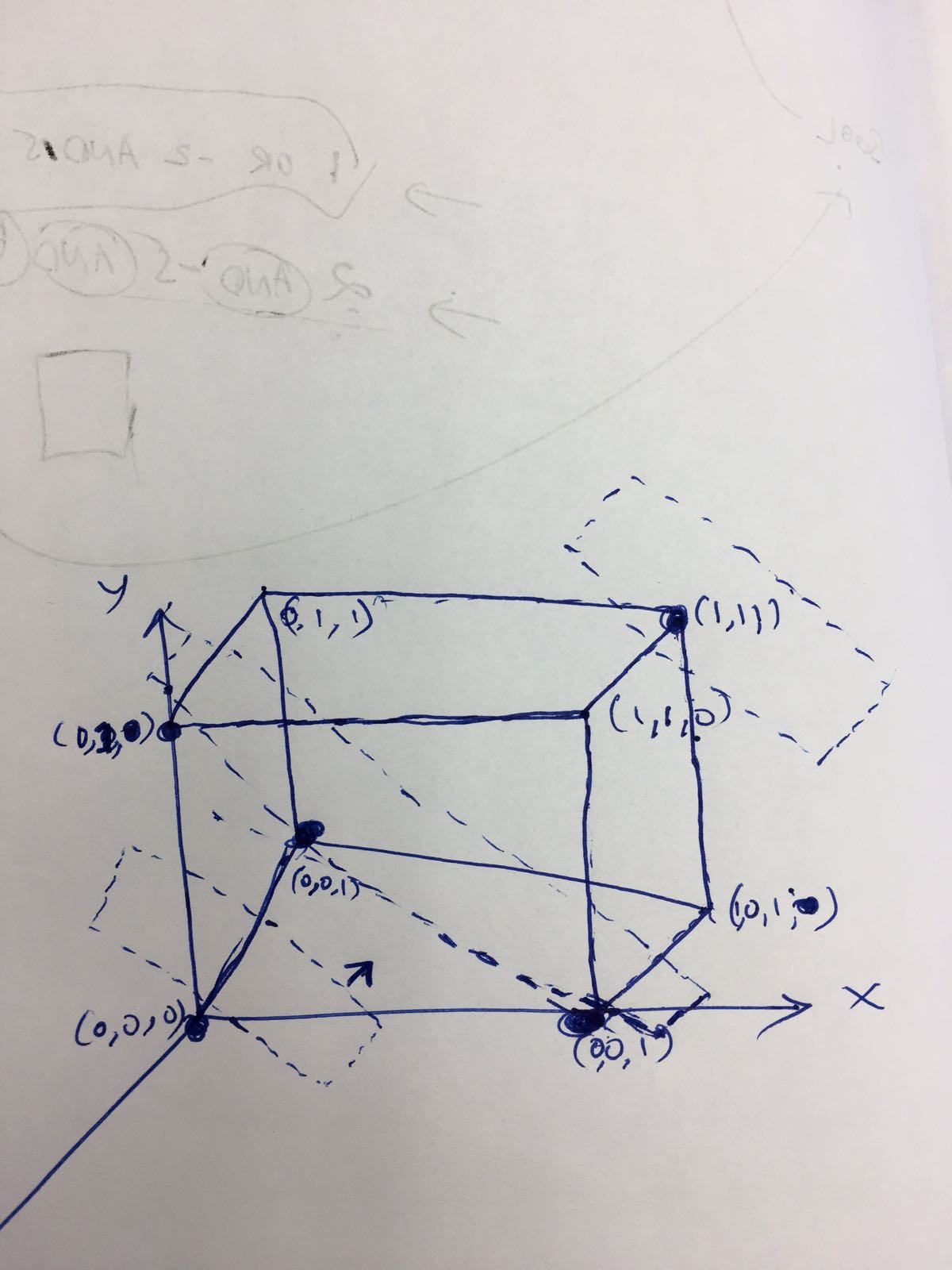
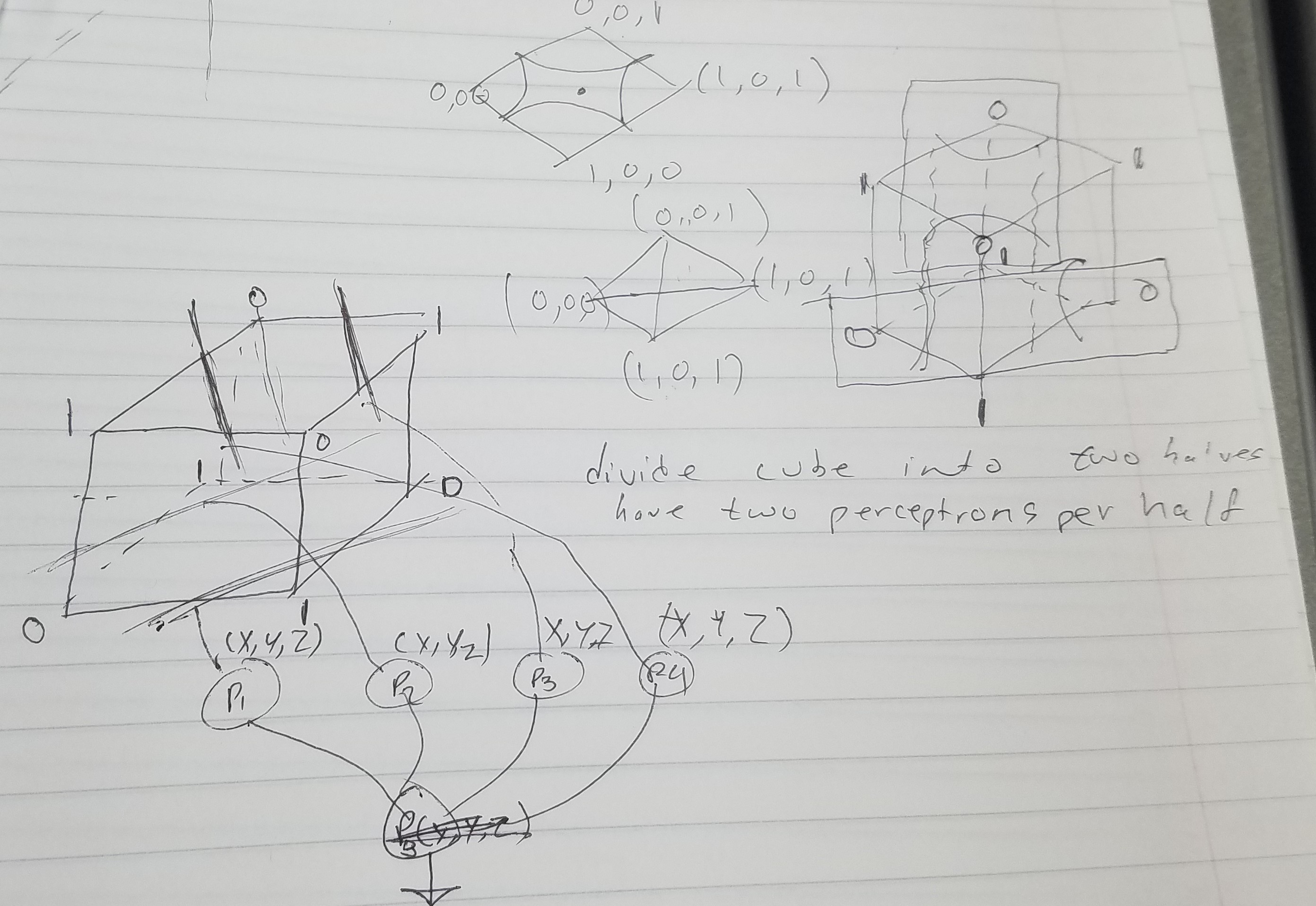
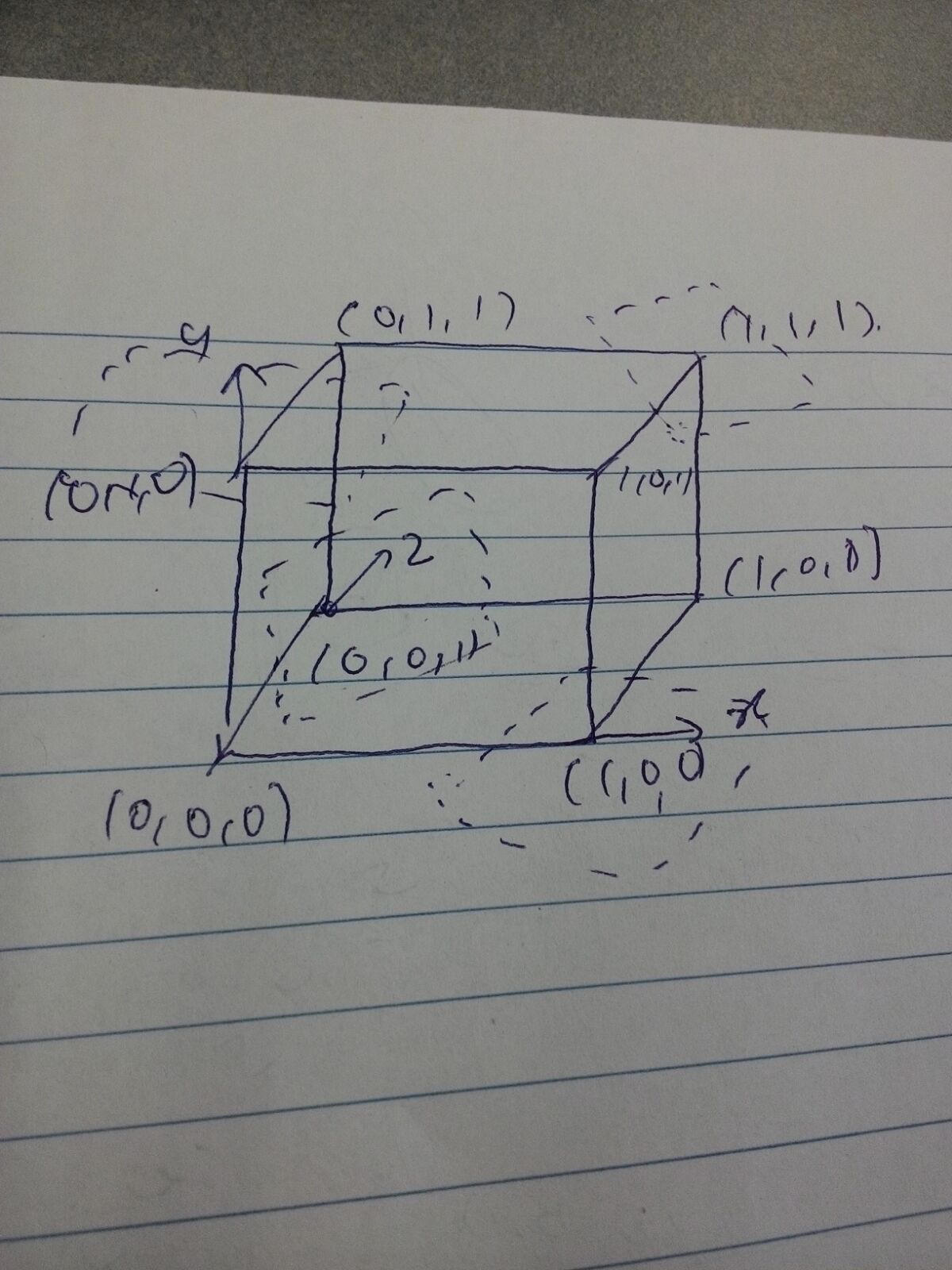
There are four points that we need:
001
010
100
111
For 111, P1 will have weights [1/3,1/3,1/3]
For 001, 010, we can have P2 as [-1, 1, 0]
For 100, we can have P3 as [1, -1, -1]
Now, a P4 with output from these three as inputs, with weights [1,1,1]
Set theta as 1
(Edited: 2017-09-20) There are four points that we need:
001
010
100
111
For 111, P1 will have weights [1/3,1/3,1/3]
For 001, 010, we can have P2 as [-1, 1, 0]
For 100, we can have P3 as [1, -1, -1]
Now, a P4 with output from these three as inputs, with weights [1,1,1]
Set theta as 1
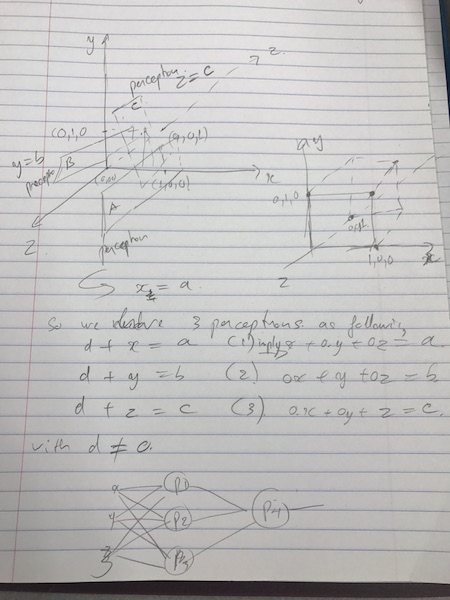
`Par_3(x_1, x_2, x_3)`
Image of planes:
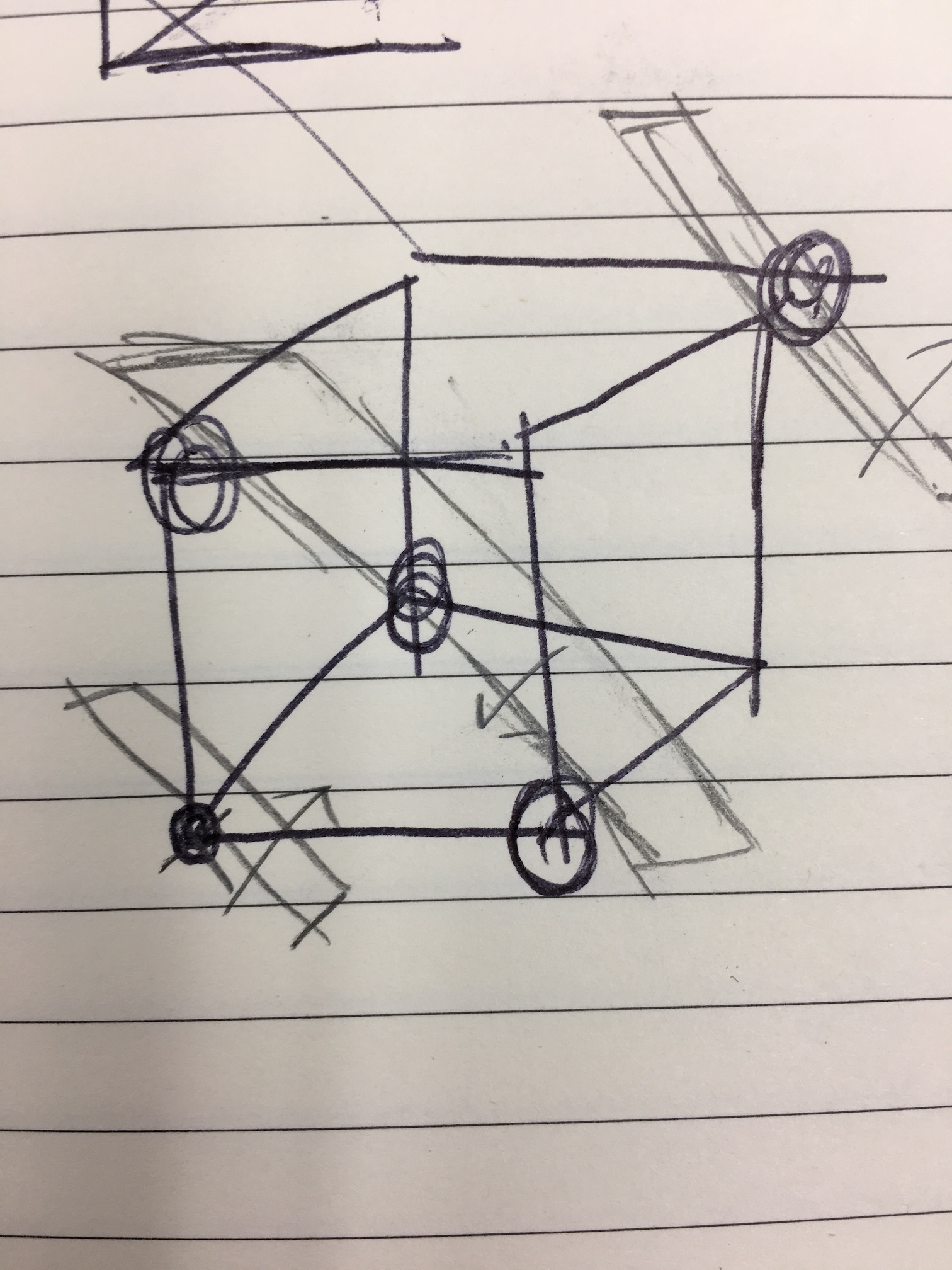
(Edited: 2017-09-20)
@BT@Par_3(x_1, x_2, x_3)@BT@
Image of planes:
((resource:IMG_6875 copy.jpg|Resource Description for IMG_6875 copy.jpg))
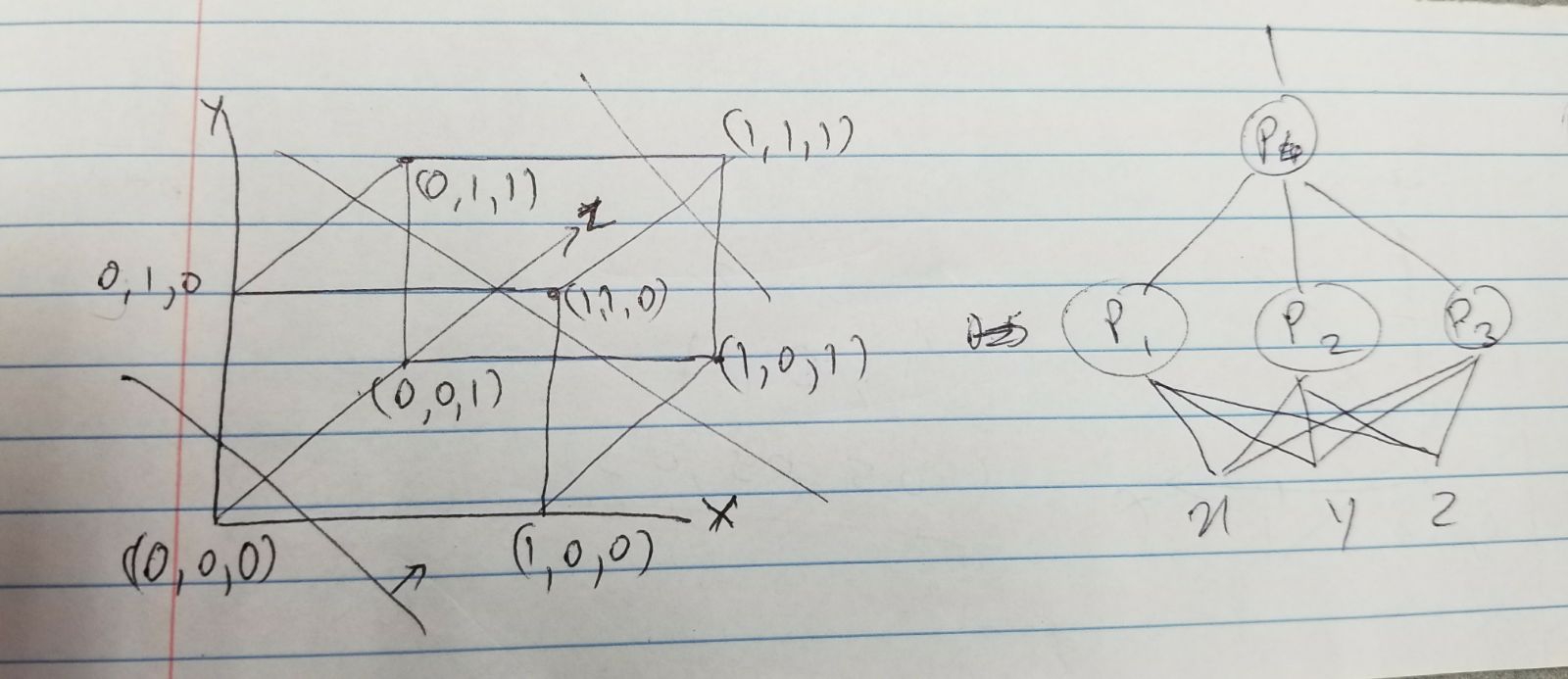
((resource:WhatsApp Image 2017-09-20 at 5.23.21 PM.jpeg|Resource Description for WhatsApp Image 2017-09-20 at 5.23.21 PM.jpeg))
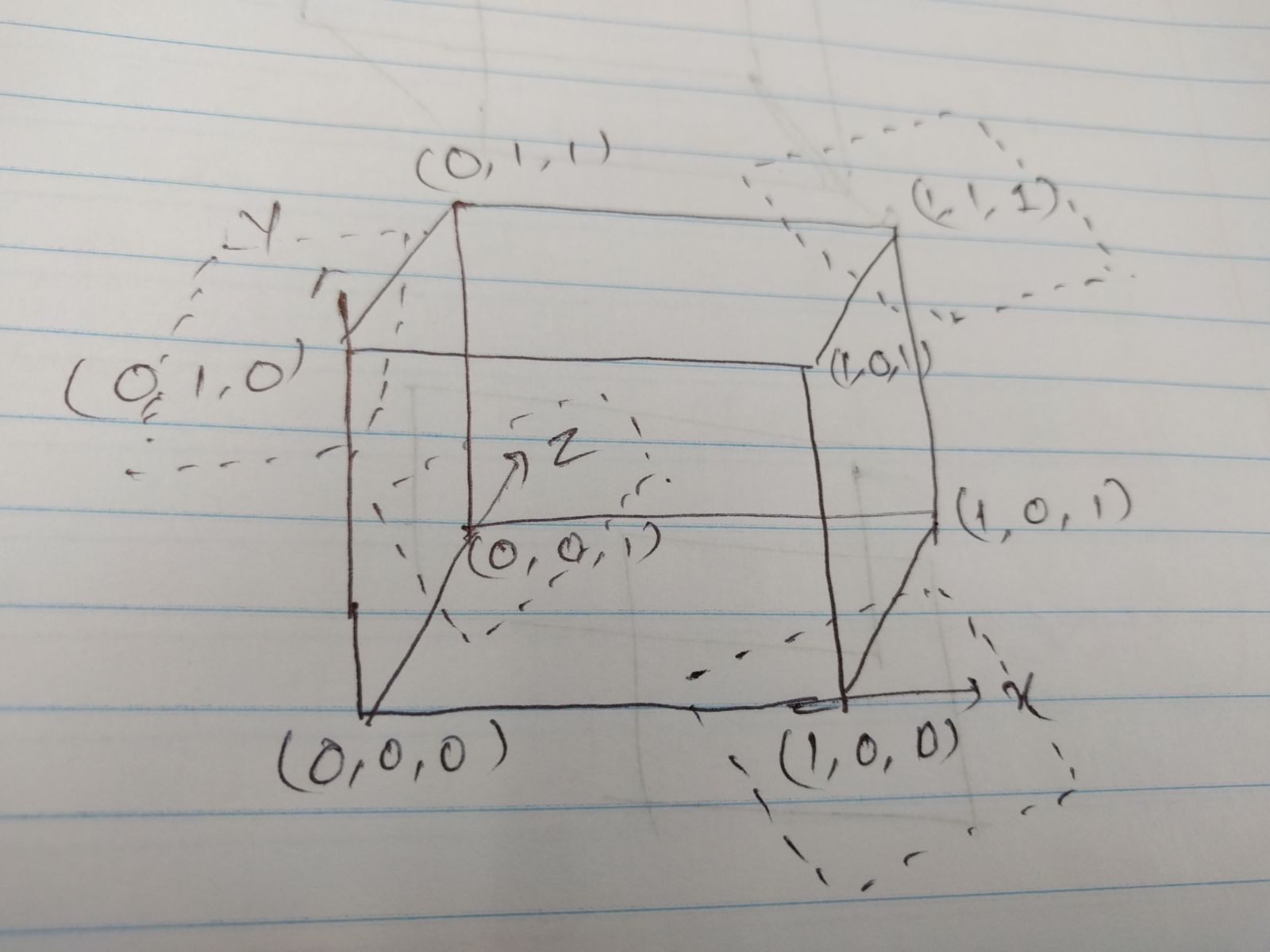
The dotted planes represent perceptrons needed.
(Edited: 2017-09-20) ((resource:WhatsApp Image 2017-09-20 at 17.28.22.jpeg|Resource Description for WhatsApp Image 2017-09-20 at 17.28.22.jpeg))
The dotted planes represent perceptrons needed.
((resource:WhatsApp Image 2017-09-20 at 5.35.22 PM.jpeg|Resource Description for WhatsApp Image 2017-09-20 at 5.35.22 PM.jpeg))
(c) 2026 Yioop - PHP Search Engine